
Itch After Hair Transplant — Causes, Care, and Why FUEsion Hair Clinics Leads the Way
Itching after a hair transplant is common, expected, and manageable. While many patients worry that persistent itch means infection or graft failure, the vast majority of post-op pruritus is a normal part of healing. What matters most is having a clinic that understands the biology of healing, uses technology and technique to minimize trauma, provides clear aftercare, and supports you through every stage of recovery.
FUEsion Hair Clinics combine surgeon-led care, robotics-assisted precision, and industry-leading aftercare protocols to reduce post-transplant itching, speed recovery, and produce natural, long-lasting results. This article explains why itching occurs after a transplant, how FUEsion prevents and manages it, what to expect day-by-day, and practical steps patients can take to stay comfortable while maximizing graft survival.

Why does itching happen after a hair transplant?
Itching is a normal feature of the inflammatory and healing phases that follow any surgical skin injury — and a hair transplant is essentially thousands of tiny, controlled skin injuries where follicles are removed and reinserted.
Common causes include:
Crusts and scabs: As the skin heals it forms tiny crusts around implanted grafts; movement or drying of these scabs produces itch sensations.
Nerve regeneration: As small cutaneous nerve endings recover and regrow, they can cause tingling and itch.
Dry scalp: Post-op drying (from saline, antiseptics, or reduced washing) increases itchiness.
Histamine-driven inflammation: The wound-healing response releases histamines and cytokines that stimulate itch receptors.
Itch from healing hair shafts: As the transplanted follicles enter the early growth/shedding phases, the hair shaft movement can irritate the surrounding skin.
Reaction to topical products: Occasionally, a sensitivity to an aftercare product will trigger itch.
Poor aftercare or infection (less common): If accompanied by heavy swelling, pus, fever, or spreading redness, the itch may be a sign of infection and needs immediate review.
Understanding the cause helps guide the remedy — and prevention is always better than cure.
Typical timeline: when itching occurs and how long it lasts
0–3 days: Numbness and tightness dominate; itching is usually minimal while anesthesia and initial inflammation are present.
3–10 days: Itching commonly increases as scabs form and inflammation transitions to healing. This is often the worst itch window.
2–4 weeks: Scabs fall away and itch usually subsides; some patients experience transient itching as nerve endings recover.
1–3 months: Mild intermittent itching can occur as transplanted follicles shed and re-enter a growth cycle.
Beyond 3 months: Persistent itch beyond expected healing times should be evaluated; in most cases it is related to scalp sensitivity or product reaction and is manageable.
With the right techniques and aftercare, most patients report significant itch reduction by week two and little to no ongoing discomfort by one month.
How FUEsion Hair Clinics Reduces and Manages Post-Op Itching
FUEsion’s approach targets both the causes of itch and the patient experience. Key strategies include:
1. Minimized tissue trauma via surgeon-led robotics assistance
Robotic-arm assistance stabilizes movements and reduces micro-trauma to the donor and recipient sites. Less damage equals less inflammatory itch.
AI-assisted follicle selection and gentle extraction techniques lower transection and preserve surrounding skin integrity.
2. Optimized graft handling and implantation technique
Rapid, coordinated graft transfer reduces extra-time grafts spend outside the body (reducing inflammatory stress).
Precise implantation angles minimize unnecessary tension and reduce local irritation.
3. Evidence-based aftercare protocol
A staged washing schedule avoids early scab disruption while preventing excessive crusting and dryness.
Prescribed topical emollients or barrier sprays maintain hydration without interfering with graft uptake.
Non-irritating antiseptic selections reduce infection risk while minimizing product-related itch.
4. Proactive medication and symptom control
Short courses of anti-inflammatory medications and antihistamines are used selectively to control excessive itch linked to histamine responses.
When clinically indicated, topical steroid courses are prescribed for localized dermatitis.
5. Patient education and 24/7 support
Clear day-by-day guidance prevents common mistakes (like aggressive picking) that prolong itching.
Open lines to the clinical team mean early review if symptoms deviate from normal healing.
These elements combine to significantly reduce the duration and severity of post-transplant itch compared with clinics that rely solely on manual techniques or generic aftercare.
Practical tips patients can use to relieve itch (day-to-day care)
Do not pick or scratch scabs. Picking increases inflammation, risks infection, and can dislodge grafts.
Follow the clinic’s washing schedule. Gentle rinsing and prescribed shampoos keep crusts soft and reduce itch.
Use recommended moisturizers or barrier sprays. These prevent excessive dryness without suffocating grafts.
Avoid hot showers for the first week. Excessive heat dries the scalp and can increase itch.
Wear loose, breathable head coverings if needed. Tight hats trap heat and moisture, which can worsen pruritus.
Take antihistamines if advised. Non-drowsy antihistamines help some patients with histamine-driven itch.
Keep sun exposure minimal. Sunburned skin itches and impairs healing.
Report worsening symptoms promptly. Increasing pain, spreading redness, fever, or discharge require urgent review.
FUEsion builds all of these patient-support elements into the recovery pathway so patients feel confident and comfortable throughout healing.
Technology and surgeon synergy — why hybrid care matters for comfort
FUEsion’s model is hybrid: advanced technology empowers the surgeon rather than replacing them. This matters for post-op itch in several ways:
Precision means less collateral damage. The less trauma to surrounding skin, the smaller the inflammatory response and the shorter the itch phase.
Surgeon judgment tailors aftercare. Experienced surgeons can adapt protocols for patients prone to sensitive skin, eczema, or allergies.
Consistency accelerates recovery. Robotics reduce variability between cases, producing more predictable healing curves and fewer outliers who experience prolonged itch.
Ultimately, the right balance of human expertise and machine precision makes healing smoother and more comfortable.
Results, before & afters, and patient stories about comfort and recovery
Many patients report not just excellent hair growth, but a smoother recovery experience after choosing FUEsion.
Typical feedback includes:
“My grafts felt tight for several days, but the itching never got out of hand thanks to the clinic’s wash protocol.” — M.J., CA
“I expected months of misery — instead I had managed itch for about a week and then steady improvement.” — J.K., NY
“Their team explained the timeline and gave clear steps. That made the itch less scary — I knew it was normal.” — L.T., FL
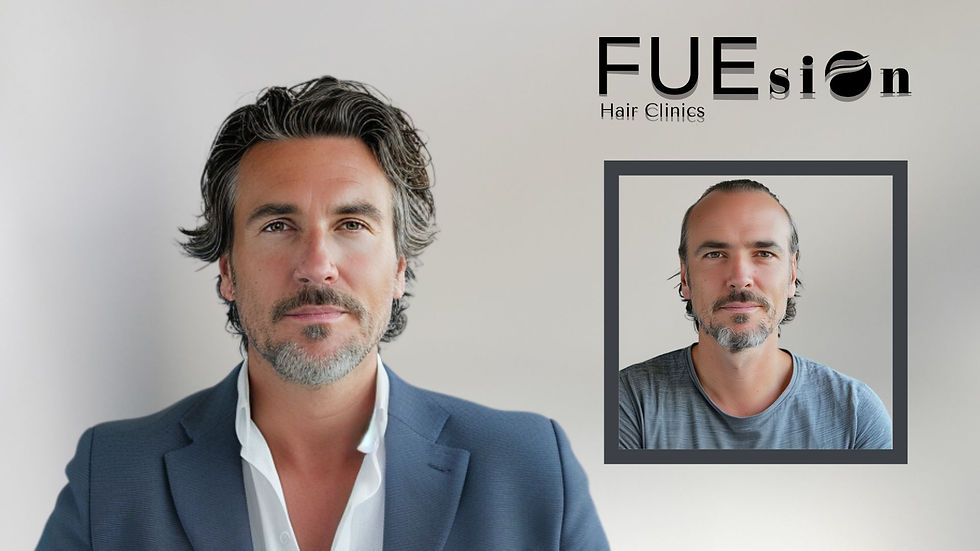
Before-and-after galleries consistently show neat donor areas with minimal scarring and recipient zones with natural hairline restoration — visual evidence that gentle technique and good aftercare reduce complications that can cause prolonged itching.
Real Testimonials from Clients
Patients across the U.S. praise the expertise and results of FUEsion Hair Clinics:
Mike J, CA: “FUEsion Hair Clinics surpassed all my expectations with their seamless hair transplant procedure. Their expertise and innovative techniques gave me the natural-looking results I’ve always wanted. I’m beyond impressed!”
Bruce V, NM: “After years of struggling with hair loss, I found FUEsion Hair Clinics. Their expertise and cutting-edge technology made the process seamless. Now, I couldn’t be happier with my new hair.”
Jonathan K, NY: “FUEsion Hair Clinics transformed my confidence with their flawless hair transplant. Their blend of expertise and state-of-the-art technology delivered exceptional results.”
Jen M, FL: “Thanks to FUEsion Hair Clinics, I’ve regained my confidence with their seamless hair transplant. Their advanced techniques delivered natural-looking results.”
When itching is a red flag: signs to seek immediate review
While most itch is benign, seek prompt attention if you notice:
Increasing pain or throbbing instead of decreasing discomfort
Spreading redness or redness beyond the immediate graft area
Pus, swelling with fever, or any systemic symptoms
Sudden increase in graft loss or unusual crusting patterns
FUEsion’s protocols include rapid clinical review pathways so potential issues are addressed early, minimizing risks and supporting comfort.
Cost considerations: does advanced care cost more?
Patients often ask whether enhanced comfort and lower complication rates translate into significantly higher cost. FUEsion places strong emphasis on value:
Technology reduces procedure time and consumable waste, which helps control per-graft cost.
Transparent pricing tools present realistic estimates upfront, so patients can factor in post-op care and follow-ups.
Flexible financing makes comprehensive packages—surgical plus maintenance—affordable.
FUEsion provides a cost estimator to give a personalized graft-range price and add-on suggestions. A free consultation produces a precise, itemized quote that includes recommended post-op care so there are no surprises.
Affordability and financing
Interest-free financing options and tailored monthly payment plans are available for qualified patients.
Bundled packages that include ScalpPulse™, PRP, or follow-up visits reduce the per-treatment cost of long-term maintenance.
Transparent pricing and clear post-op provisions mean fewer unexpected expenses from complications — another way comprehensive care delivers better value.
Free consultation & what it includes
Every prospective patient receives a complimentary consultation that covers:
AI-assisted scalp and donor assessment
Surgeon review and personalized graft estimate
Detailed post-op plan with specific anti-itch measures and product recommendations
Discussion of financing and cost calculator results
Viewing of patient before-and-after portfolios relevant to your hair type
This visit ensures you leave with a clear, confidence-building plan for both results and recovery.
FUEsion Hair Clinics U.S. locations
FUEsion maintains multiple accessible clinics across the United States. Exact addresses currently include:
Beverly Hills, CA — 8920 Wilshire Blvd, Suite 604, Beverly Hills, CA 90211
Brooklyn, NY — 2748 Ocean Ave, 3rd Floor, Brooklyn, NY 11229
Buffalo, NY — 777 Maple Rd, Suite 400, Buffalo, NY 14221
Oak Park (Chicago), IL — 322 Lake St, Oak Park, IL 60302
Coral Springs, FL — 5850 Coral Ridge Dr, Suite 103c, Coral Springs, FL 33076
Honolulu, HI — 1188 Bishop St, Suite 2705, Honolulu, HI 96813
Henderson (Las Vegas), NV — 3195 St Rose Pkwy, Henderson, NV 89052
Surprise (Phoenix), AZ — 14749 W Mountain Blvd View, Suite 400, Surprise, AZ 85374
Queens, NY — 64-26 Queens Blvd, Woodside, NY 11377
Santa Ana, CA — 401 N Tustin Ave, Santa Ana, CA 92705
(Clinic availability and hours may vary by location; contact the chosen clinic for the most convenient scheduling.)
FAQs — quick answers about itch after hair transplant
Q: Is itching a sign my grafts are failing?
A: Not usually. Normal healing itch is common and not an indicator of graft loss. Persistent worsening symptoms should be reviewed.
Q: Can I shower and shampoo if I’m itchy?
A: Follow the clinic’s washing schedule. Gentle rinsing and recommended shampoos help reduce scabs and itch without jeopardizing grafts.
Q: Will I need medication for itch?
A: Many patients don’t. If itch is severe, short-term antihistamines, topical emollients, or a prescribed anti-inflammatory may be used.
Q: Can scratching dislodge grafts?
A: Yes. Picking or aggressive scratching can dislodge grafts and should be strictly avoided.
Final thoughts — comfort is part of excellent outcomes
A smooth recovery with minimal itching is not a random outcome — it’s the product of precise surgical technique, smart technology, tailored aftercare, and clear patient education. FUEsion Hair Clinics prioritize all of these elements, giving patients both outstanding aesthetic results and a comfortable, confidence-building healing experience.
If you’re considering a transplant and the thought of itching is a concern, schedule a free consultation to get a personalized plan that accounts for your sensitivity, lifestyle, and aesthetic goals. The right clinic—and the right plan—can make all the difference between a nerve-racking recovery and a calm, controlled healing process.


Comments