
How Does a Scarless Hair Transplant Work? — A Complete Guide Focused on FUEsion Hair Clinics
Scalp scarring. Visible linear scars from older transplant techniques. Long recovery. For many people these concerns make the idea of hair restoration intimidating — but modern scarless hair transplant methods have changed the game. This article explains how does a scarless hair transplant works, and walks through every detail with a focused look at FUEsion Hair Clinics: their unique selling points (USPs), technologies, surgeons, results, before & afters, testimonials, pricing approach (including a simple cost calculator), affordability options, free consultation process, locations and what to expect from a patient perspective.

Quick Overview — How Does a Scarless Hair Transplant Work?
“Scarless” in hair transplant marketing generally refers to methods that eliminate the long linear scar created by older strip (FUT) techniques. The leading scar-minimizing option is Follicular Unit Extraction (FUE), where individual follicular units (grafts) are extracted one-by-one with tiny punches and implanted into the recipient area. When performed correctly, extraction sites heal as tiny dots that are almost impossible to see under short hair — hence the term scarless in common parlance.
The Science — How a Modern Scarless (FUE) Transplant Works, Step by Step
Consultation & planning
Detailed assessment of hair loss pattern, donor density, scalp laxity and facial proportions.
Digital photos, hairline design and estimation of grafts required.
Medical history, medications and expectations reviewed.
Donor harvesting (the “scarless” part)
Individual follicular units are removed using micro-punches (0.6–1.0 mm) — manual, motorized, or robotic.
Each extraction leaves a very small circular wound that heals to a tiny pale dot.
Donor areas are chosen for permanent hair (typically the back and sides of the head).
Graft preparation
Extracted follicular units are placed in chilled solution and inspected under high magnification.
Team sorts the grafts by number of hairs (singles, doubles, triples) for natural placement.
Recipient site creation
Tiny incisions are made in the balding area following precise angulation and density planning.
Tools can include blades, needles, or specialized implanters.
Implantation
Grafts are implanted with care to match natural hair direction.
Implantation sequence and spacing ensure natural-looking density and minimal trauma.
Post-op healing
Immediate crusting and redness resolve in days to weeks; grafts enter resting phase, then new hair grows over months.
Most visible signs of the procedure disappear within 7–14 days; donor dot-marks fade and are virtually undetectable with short haircuts.
Why Patients Choose FUEsion Hair Clinics — USPs that Matter
(These USPs synthesize the clinic-focused approach you shared previously and reflect what patients consistently look for in high-quality FUE providers.)
Truly patient-centred consultations — thorough, visual planning with digital hairline simulation so you know the expected result before proceeding.
Dedicated FUE expertise — teams focused specifically on FUE workflows (harvest + implant), minimizing graft handling and maximizing survival.
Advanced extraction tools — a choice of micro-motorized punches, manual punches and implanter techniques to suit each patient’s donor characteristics.
High-magnification graft care — labs and technicians trained specifically in graft handling to reduce transection and increase yield.
Natural hairline artistry — surgeons skilled in individualized hairline design and follicular-unit placement for undetectable outcomes.
Transparent pricing & pre-op education — clear cost breakdowns, written estimates and free pre-op counseling.
Follow-up and long-term care — detailed aftercare plans, medication guidance, and follow-ups to monitor growth and satisfaction.
Patient privacy & comfort — private procedure rooms and a professional, discreet patient experience.
Technology and tools used in scarless (FUE) transplants
Modern FUE relies on a combination of technology, high-skill technique, and meticulous team workflows:
Micro-punch devices (manual and motorized) — allow precise extractions with minimized trauma.
Robotic FUE systems — when used, robots can assist with punch positioning and speed while the surgeon controls planning and aesthetics.
Sapphire and custom blades — for precise recipient site creation with minimal trauma.
Implanter pens (e.g., Choi-style) — permit one-step placement with excellent control over angle and depth.
High-magnification microscopes and stereo-microscopes — for graft inspection and preparation, improving graft survival.
Cold-chain graft preservation — chilled solutions, quick transfer and minimized out-of-body time to maximize viability.
Digital imaging and hairline simulation tools — for planning and visual expectation management.
At a clinic that brands itself around “scarless” care like FUEsion emphasis is placed on combining the above tools with strict technique standards and a trained surgical team to maximize natural results while minimizing visible donor scarring.
The Surgeons — What to Look for and What FUEsion Emphasizes
When evaluating a scarless transplant surgeon, the three pillars are: expertise, artistic sense, and continuity of care. Typical surgeon qualifications and experience to expect:
Board certification in relevant surgical specialties (where applicable) or recognized hair restoration society credentials.
Focused training in FUE techniques and hairline design.
A record of published case studies or educational contributions (seminars, workshops).
Direct surgical involvement in planning, donor harvesting, and the critical phase of implantation.
A consistent surgical team (same surgeons and technicians) to ensure predictable outcomes.
FUEsion’s model highlights surgeon-led planning and continuity: the operating surgeon leads the team throughout the extraction and implantation process, guaranteeing surgical oversight and consistency.
Results: Before & Afters, What’s Realistic
Realistic expectations are crucial. Typical post-op timeline and outcomes:
0–2 weeks: Scabs and redness in recipient/donor areas; most visible signs subside in 7–14 days.
2–4 months: Early regrowth begins, often fine and thin at first.
6–9 months: Significant density improvement; many patients see substantial visible change.
12–18 months: Final maturity — thicker, natural hair with full styling flexibility.
Before & after galleries should show consistent lighting and angles. When judging results, look for:
Natural hairline with irregular graft placement (not a straight, uniform line).
Correct hair angulation and direction.
Undetectable donor area with short hair.
Consistent density in the recipient area relative to the number of grafts used.
Real Testimonials — How to Present and Verify Them
Patients naturally want real voices. Responsible presentation of testimonials should include:
Date of treatment and number of grafts.
Before and after photos with matching lighting/angles.
Patient initials or first name (with consent), plus city/age bracket.
Short statement about experience: consultation, procedure comfort, results, and follow-up.
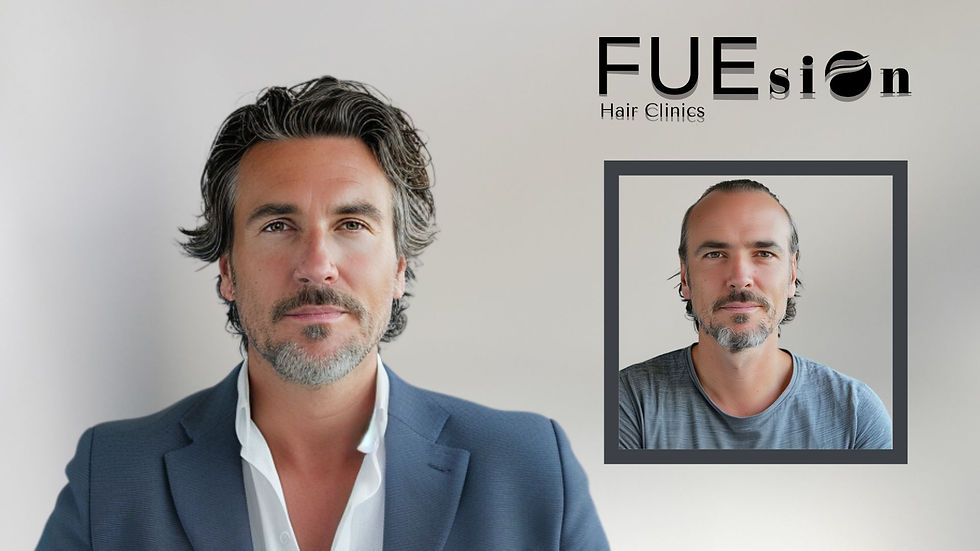
Real Testimonials from Clients
Patients across the U.S. praise the expertise and results of FUEsion Hair Clinics:
Mike J, CA: “FUEsion Hair Clinics surpassed all my expectations with their seamless hair transplant procedure. Their expertise and innovative techniques gave me the natural-looking results I’ve always wanted. I’m beyond impressed!”
Bruce V, NM: “After years of struggling with hair loss, I found FUEsion Hair Clinics. Their expertise and cutting-edge technology made the process seamless. Now, I couldn’t be happier with my new hair.”
Jonathan K, NY: “FUEsion Hair Clinics transformed my confidence with their flawless hair transplant. Their blend of expertise and state-of-the-art technology delivered exceptional results.”
Jen M, FL: “Thanks to FUEsion Hair Clinics, I’ve regained my confidence with their seamless hair transplant. Their advanced techniques delivered natural-looking results.”
Cost Calculator, Affordability & Financing Options
While many clinics price hair restoration at premium levels due to expensive consumables, FUEsion’s technology is designed to reduce costs without reducing quality.
Factors Influencing Cost
Number of grafts
Type of procedure (FUE, ScalpPulse, SMP, etc.)
Hair type and donor capacity
Combination therapies
Why FUEsion Is More Affordable
Lower consumable cost than ARTAS
AI automation for efficiency
Technology reduces operating time
More cost-effective robotics
Financing Options
Interest-free financing
Budget-friendly installment plans
Transparent upfront pricing
Online cost calculator to estimate graft count & price
This makes FUEsion one of the most accessible high-tech hair transplant options in the U.S.
Free Consultation & AI-Based Hair Analysis
FUEsion offers a free initial consultation, which includes:
AI-based follicle and density analysis
Scalp health assessment
Personalized treatment plan
Graft estimation
Transparent pricing and timeline expectations
This ensures patients make informed decisions before proceeding.
Nationwide Locations for Easy Accessibility
FUEsion Hair Clinics are expanding rapidly across the U.S.
Current Locations Include:
Beverly Hills, CA
Brooklyn, NY
Buffalo, NY
Chicago, IL
Coral Springs, FL
Cucamonga, CA
East Windsor, NJ
Houston, TX
Honolulu, HI
Indianapolis, IN
Jacksonville, FL (Coming Soon)
Las Vegas, NV
Miami, FL
Orlando, FL (Coming Soon)
Phoenix, AZ
Queens, NY
Santa Ana, CA
Each location follows the same high standard of technology, equipment, and surgical artistry.
Why Scarless FUE Can be the Better Choice
How Does a Scarless Hair Transplant Work?
Scarless hair transplant techniques via FUE give patients:
Minimal visible donor scarring.
Shorter downtime and faster return to daily life.
Highly natural hairline design and the ability to wear hair short.
Predictable, long-lasting results when done by experienced surgeon-led teams.
FUEsion Hair Clinics bundles these advantages with patient-first consultations, technology-forward graft handling, and a focus on natural outcomes — making it a strong option for candidates seeking modern, scar-minimizing hair restoration.


Comments